your photos are the ground truth · originals archived before a replace · undo in one click
Reconstructed, never imagined — every shot is grounded in reference photos you choose. An angle they don’t document is an invention, and the studio won’t claim one.
Four kinds of shot — clean studio stills, lifestyle scenes, on-model looks with a consistent cast, and product video.
The whole catalog in one grid — every product’s gallery coverage at a glance, with batch answers for the gaps.
You review before anything publishes — re-render any shot until it earns its place. Nothing reaches your store on its own.
Publish with a real undo — append or replace on the live product. Originals are archived first, and putting them back is one click.
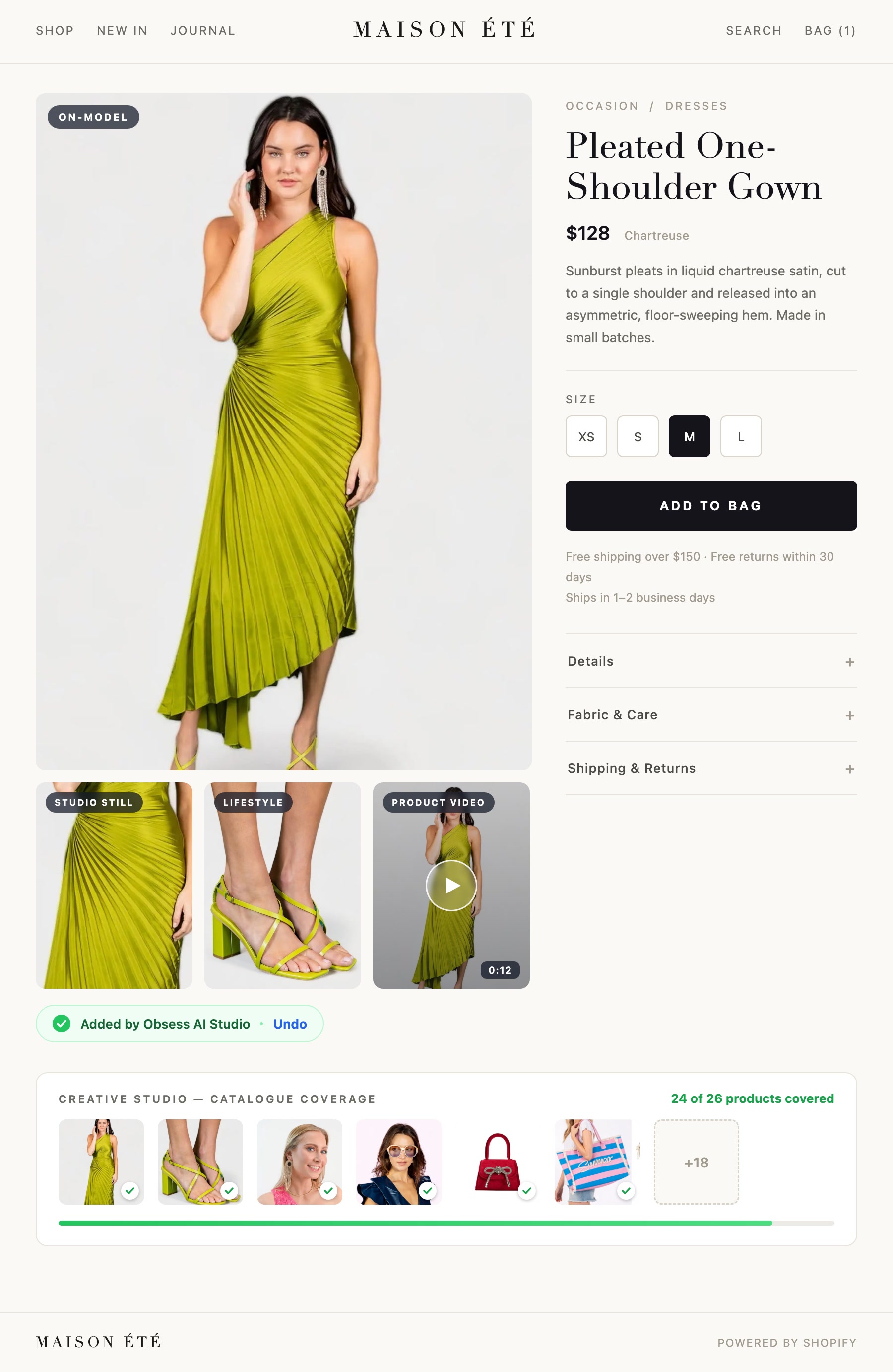
gallery filled by the studio — published with undo
maison-ete.com/products/pleated-one-shoulder-gown
Reference → generated
Every pixel answers to a photo you already have.
Generated product photography has exactly one honest foundation: every pixel has to be answerable to the product’s real references. The moment a camera is allowed to imagine your product instead of reconstructing it, the picture stops being product photography and becomes an artist’s impression — one a customer can order, receive, and return.
So this camera reconstructs. The photos a product already has are its ground truth, and every shot is composed from the ones you choose — same print, same seams, same hardware. An angle your references don’t document is an invention, so the studio never claims one into your gallery. It asks you for another reference instead.
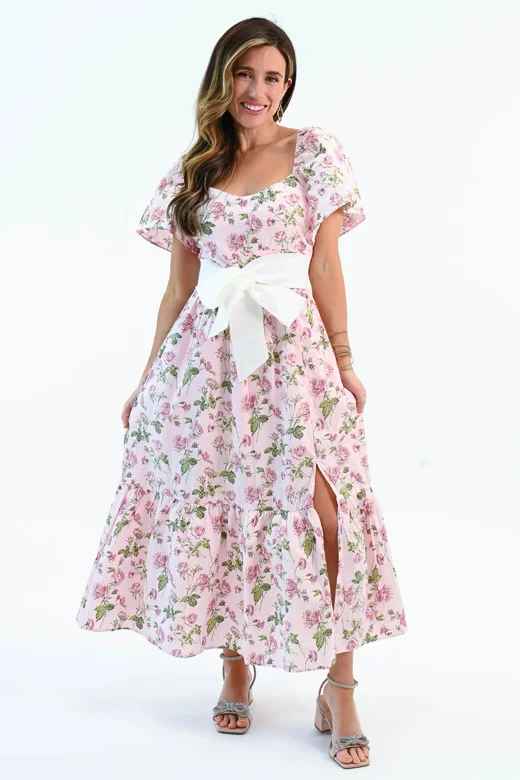
the referencethe product’s own photography→rebuilt from it
AI-generated
the same dress, in a new scene
A real product from a real store — Bezza. The left is its Sending You Love floral maxi dress’s own catalog photography; the right is a five-second reel rebuilt from that photography in the same August 2026 shoot as the stills further down. Same rose print, same bow belt, same tiered skirt and side slit — and nothing was filmed.
How a shoot runs
Six steps, and the publish is yours.
A shoot starts from what the gallery is missing, not from a blank prompt — and everything the camera does afterwards happens between two decisions you make: which photos are the truth, and whether the results deserve your store.
01
It reads the gallery
The photographer looks at what each product already shows and names the shots that are missing — before anything is generated.
02
You choose the references
The photos a shot is grounded in are photos you pick. They are the only truth the camera gets.
03
The set is planned in chat
Scenes, cast and rooms take shape in conversation, and the plan is yours to change.
04
It renders
Each shot is composed from its references — the product rebuilt, never reimagined.
05
You review
Every shot, before it goes anywhere. Re-render any of them until they earn their place.
Merchant gate
06
Publish, with a way back
Append or replace on the live product. Originals are archived first; undo is one click.
an angle the references don’t document is an invention — the studio won’t claim it, and asks for another reference instead
The safeguards
Nothing here publishes itself.
A generated photo on a live product page is a claim to the person about to buy it, so the studio treats publishing as the dangerous step and puts everything in front of it. Shots are answerable to references, you are the review, and the gallery you already had is never the price of trying.
Nothing publishes itself — every shot waits for your review, and the publish is a button only you can press
Checked against the references — a rendered shot is compared back to the photos it was grounded in, not to a description of them
Originals archived before a replace — the gallery you had is kept, byte for byte, before anything changes on the product
Undo is one click — the archived gallery goes back exactly as it was
Failed shots are shown — a render that didn’t survive review is something you see, never something quietly hidden
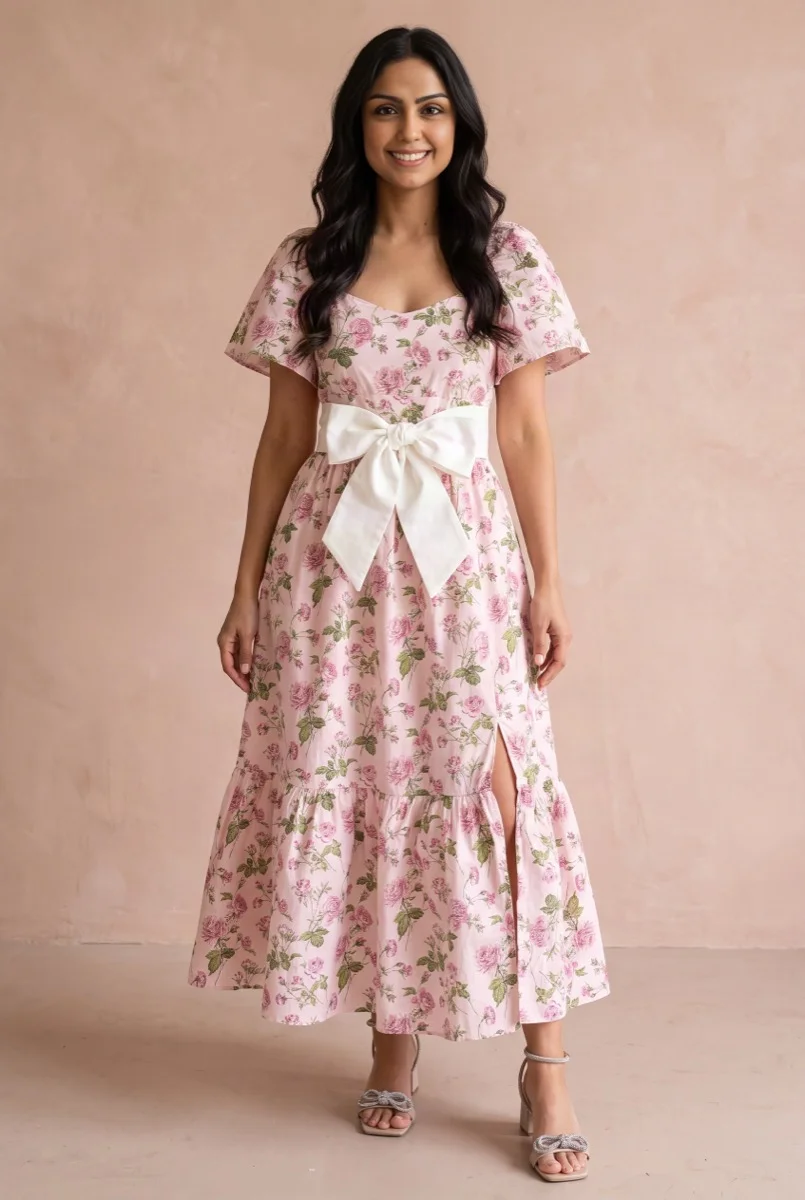
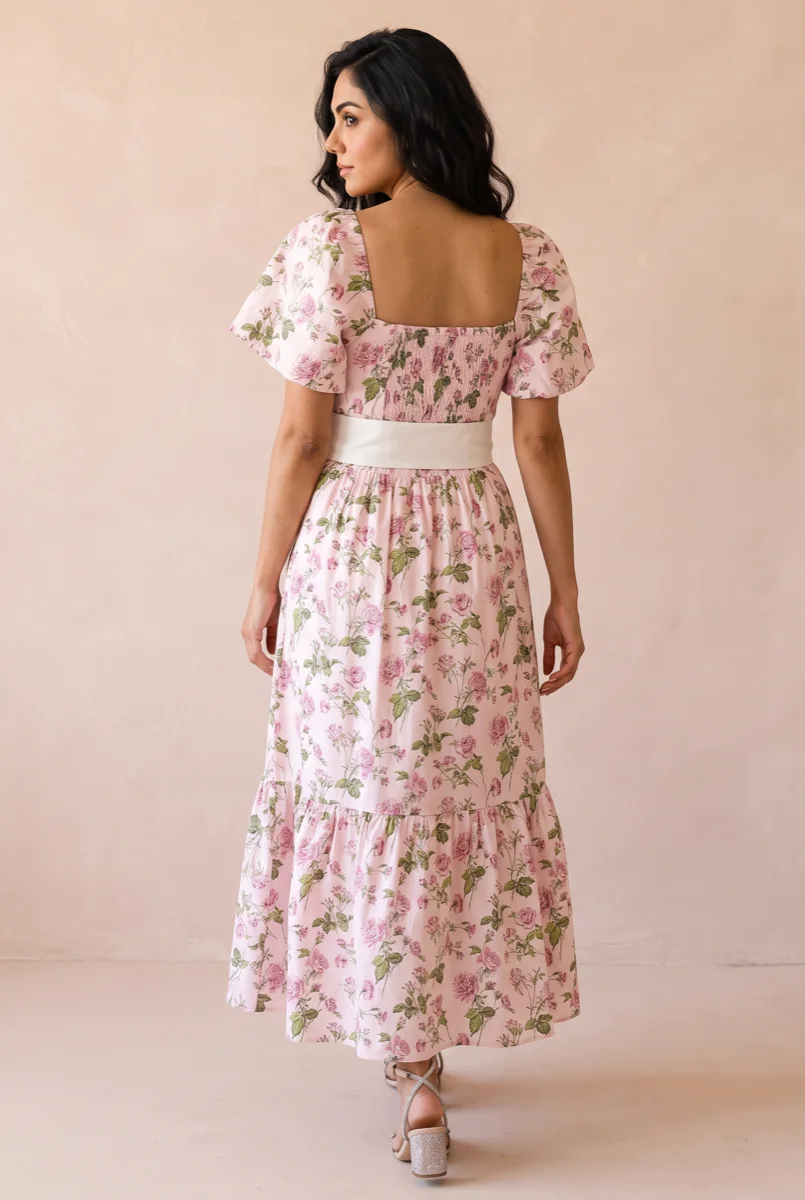
rendered, then reviewed
frontpassed the product check
from behindpassed the product check
Two stills from a newer Bezza shoot — its Sending You Love floral maxi dress, front and from behind, rendered from the dress's own catalog photography and checked back against it before either was kept. The print, the bow belt and the smocked back all had to answer to the references.
The cast
The same faces, on purpose.
On-model shots need a model. Ten presenters ship with the studio — AI-generated, licensed for commercial use — and the one you cast keeps the same face in every shot, every product, every campaign.
Elsawarm, nordic, 30s
Mayaenergetic, urban, 20s
Linneacalm, scandi, 40s
Marcoconfident, mediterranean, 30s
Aishaupbeat, streetwear, 20s
Erikdry-witted, outdoorsy, 50s
Sofiapolished, editorial, 30s
Theowarm, storyteller, 40s
Meiplayful, minimalist, 20s
Noahdeep, cinematic, 30s
A consistent face is an accuracy feature. A store whose photography shows a different person in every frame reads as a stack of stock photos, and a customer learns to trust none of them. A cast member who recurs is what makes the catalog read as one store — and if the face should be yours, your own people can join the cast, with their permission on record.
The rooms
One catalog, one visual world.
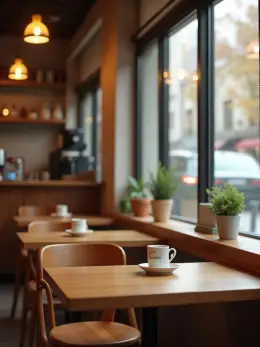
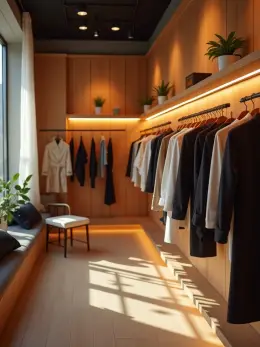
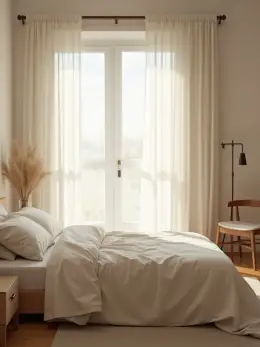
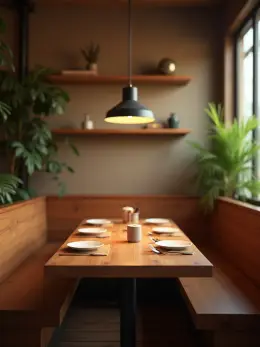
A lifestyle shot has to happen somewhere. Shots are staged in rooms — ready ones like these, or rooms saved for your own brand — and a room, once kept, can be returned to by every shoot after it.
Café
Boutique
Bedroom
Kitchen
Dining nook
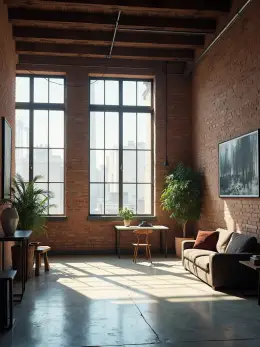
Industrial loft
Vanity
Garden patio
Beach
Bookstore
The room is the thread. Twelve products photographed in twelve unrelated places look like twelve different stores; the same products, returning to the same rooms, look like a brand. The product in the frame still answers to its references — the room changes around it, never the thing you sell.
Beyond apparel
The same camera, for any catalog.
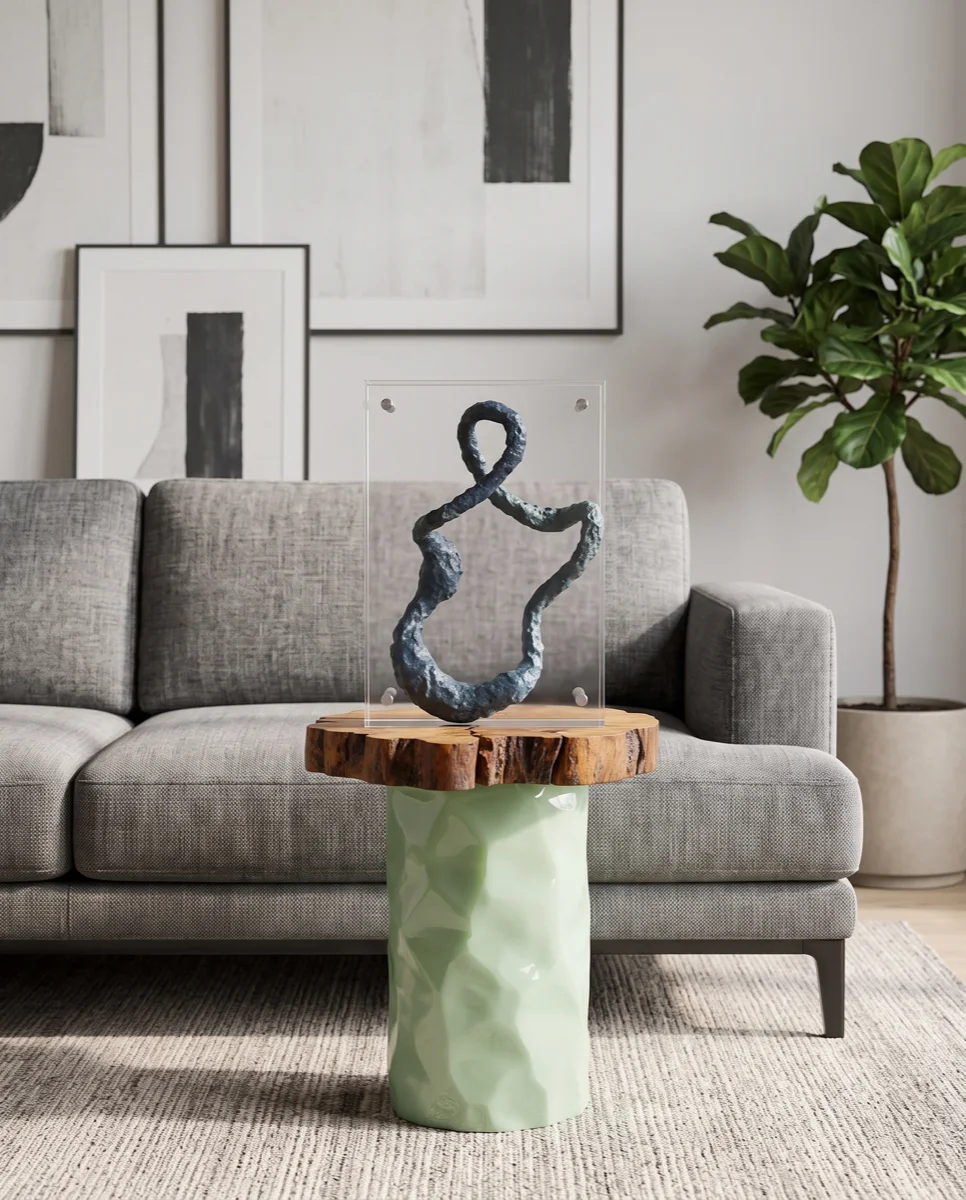
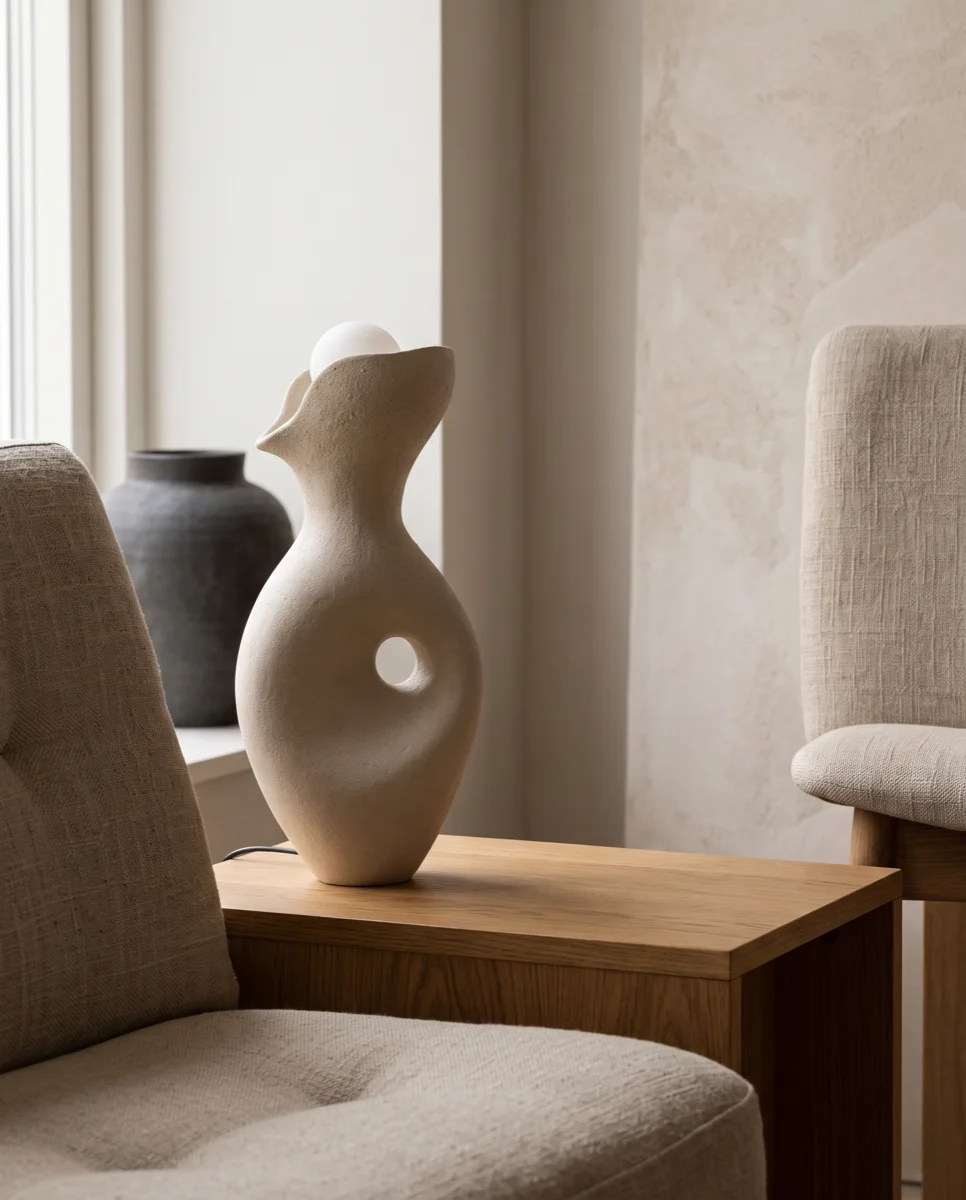
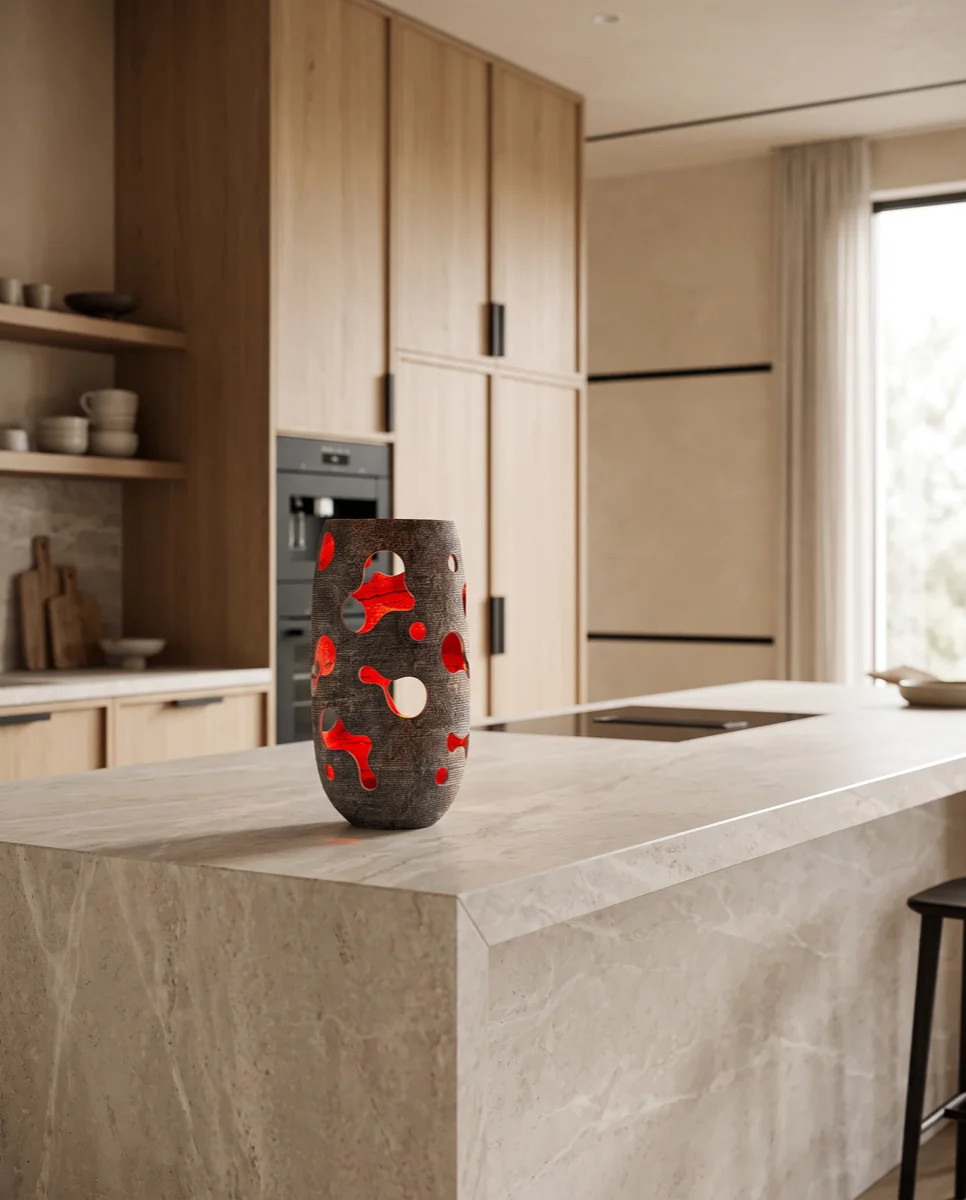
Nothing above is a fashion feature. A side table has seams and hardware the way a dress has a print, and it answers to its references the same way. Three finished renders from Curio — a home & decor merchant — its products rebuilt from their own photos and staged in rooms.
Glass Sculpture 04with the Tronco side table
Exo table lamplit by a window
Candle lantern vaseon a kitchen island
The doctrine doesn’t care what you sell. A sculpture, a lamp and a lantern vase, each reconstructed from the product’s own photography and placed in an interior a buyer can picture it in — the same grounding, the same review, the same publish gate as everything else on this page.
Product video
The same doctrine, in motion.
Video is where generated product imagery usually drifts — every frame is another chance for the product to become something else. So motion is grounded the way the stills are: composed around the product’s own catalog photography, with the product required to stay the thing you sell. Three real outputs, from the two catalogs this page has already named.
a fashion boutique
AI-generated
A gingham top, at brunch5s · on-model motion
the same boutique
AI-generated
A color-block knit, mid-stride5s · on-model motion
a home & decor merchant
AI-generated
A silk rug, in a living room5s · product in scene
The gingham top and the color-block knit are Bezza’s — both live products in its catalog, both shot in August 2026. The rug is Curio’s, from the same studio library as the renders above. Nothing in any of the three was filmed.
Using the studio as a product video maker? The full workflow, from reference photos to a clip published in the Shopify gallery, is in the product video guide, and the wider case for generating video from photos you already own is in the AI product video post.
Your next product shoot is already in your catalog.